Friday, January 30, 2015

Small Business Logo Design

Golden Arches, Bull's-eye, The Swoosh, Big Blue. These are all immediately recognizable even without saying a word. Consumers know exactly which company belongs to which logo. How? And, why should you care? Well, to put it simply the word is "branding." This gives your customers instant identification with your company, product, service & brand.

A big part of the success of branding is having a logo. How you portray your company visually when in the public eye is important. Just as we are personally judged by the clothes we wear (in other words, how we "appear"), our business is similarly judged by how it appears to its target audience of potential buyers.

According to the American Marketing Association, "...there is proof that a recognized brand can help a consumer differentiate a product from its competitors." The article goes on to say that if two companies are perceived as very similar, then the only differentiator is price - never good for any small business owner in the long run.

There are social psychologists that will tell you that color evokes strong emotion & that certain shapes are interpreted in certain ways. You will likely need the assistance of a professional graphic designer to get your look just right, but here are some tips:

1. Start with a feeling. What emotion are you trying to evoke? A bank wants consumers to think it is stable, strong, so their standard color palette uses blue. A kids' cereal wants to create a sense of fun & its colors are happy; they use primary colors. A perfume seeks to create passion; these are usually red or black with touches of metallic colors. For example, when creating my own colors and logo I knew green is my favorite color & I wanted a quirky touch. I wanted it to reflect, well - me! I have come to identify with "upside down man" & my clients expect to see him on all my materials.


2. But, there are 64 colors in my crayon box! Yes, but you don't have to use all of them. In each case discussed above they use only 1 color. Golden Arches are, well - gold. The bulls-eye is red. The swoosh is either white or black. And, of course, Big Blue is just blue. Don't overdo it.

3. Is it reflective of your product or service's benefits? I recently worked with a company that created vitamins & supplements that were scientifically superior to their competitors. The specific product I worked with them on was a formula to preserve the youthfulness & elasticity of skin. Their label, however, looked more like grandma's cross-stitch pillow. If you saw their packaging on a shelf while shopping for such a product you would not identify it with youth at all & would likely walk right by it.

4. Lost in translation. A powerful logo requires no thought on the part of the consumer. If we don't "get it" immediately, it's a wasted effort. This should hold true on a local, or perhaps one day in your company's future, global basis. Some well-known corporate logos transcend culture & language. Coca-Cola & MTV are as easily recognizable in New York as they are in New Delhi. So while today you may be a small, local business tomorrow you may be selling everywhere from your website.

5. Psychological impact. I recently met with a client who wanted a brochure redesign. She created a sketch of it herself on her computer & brought it to our meeting to discuss. She wanted to incorporate a "10 Step Plan for Financial Success" & laid out the steps vertically. I immediately noticed that the arrow was pointing down. Now, this made sense in the scheme of things as Step 1 was on top, proceeding further down to Step 10. But I suggested to her that she let the designer redo it so that the arrow pointed up. Psychologically I thought that a downward pointing arrow would not benefit her Financial Advisor business model of growing nest eggs & increasing clients' net worth.

6. Many, many media. Once your logo is finalized it will be used everywhere to identify your business, including: stationery, business cards, website & brochures. If you plan on doing advertising you may want to consider how your logo will look in black & white as this will help keep your costs down when purchasing ad space. Do you plan on taking part in trade shows? If so, give some thought to what your logo will look like when it is enlarged for use on a big banner. What about a billboard?

7. Educate and inform. It is very important to let your target audience know where you are in the market (low price? luxury brand?), what it is that you do (plumbing? estates and trust lawyer?) & what is the nature of the product you are selling (this is also true for services). Some of these can be accomplished just be using a smart choice of font (for example, script fonts evoke a sense of higher pricing.)

8. Think of all the places it will go. Once your logo is finalized, ask your graphic designer to save it for you in various formats so that you can easily use it everywhere. I suggest a JPEG format in both high & low resolutions, a black & white version & in a few different sizes; & you'll also want a TIFF file in both these color palettes as well. By doing this you are covered for every use imaginable including some you may have never thought of such as: custom mailing labels straight from your office printer, social media, create your own sell sheets, for use on your proposals & so much more.

9. Haven't I seen this before? Be aware that companies take their logos very seriously & most are copyrighted. If you use or create a logo that looks very similar to someone else's be prepared to receive an invitation for a court date. I feel fairly confident (not having a legal degree) saying that another restaurant couldn't get away with, say, "Orange Arches."

10. Consider production. It's never too early to start thinking about the final printed product. When designing a logo on a tight budget consider the # of colors used - the fewer the # of colors, the less expensive it is to print. And, consider the closeness of the colors - if 2 colors touch or overlap it is more expensive to print because of something called 'trapping' which means critical alignment so that the colors don't butt up against each other. Making sure this doesn't happen can take several steps at the print shop which adds cost to the final piece. Finally, it is recommended that you talk to your printer before embarking on a complex logo creation. In the end this will save you lots of time & trouble.

So, how does a start-up company know what its logo should look like? Find a graphic designer that will spend time with you verbally brainstorming ideas. It is a collaborative effort & the business owner must play a role in the logo's creation. The process usually works like this:

• Start with brainstorming sessions.
• Sketches are drawn & colors considered.
• Some get knocked out immediately due to various factors.
• Does it appeal/speak to your target audience?
• After some back & forth a final design is created.

What about redesigning a logo that might be out of date? Some companies choose to redesign logos after a period of time. Campbell's Soup has morphed their logo over time & even Betty Crocker has gotten a facelift. So, when should a logo be redesigned? Here are some guidelines:

• How old is it? Some logos can live on forever without ever needing a change, and some benefit from a more modern look to stay relevant in today's digital world. Recent logo changes have included Payless Shoe Source, and Stop and Shop Supermarkets.
• Has it lost its effectiveness? If it no longer evokes the right emotion or has lost meaning over time, it might need an update. Perhaps the generation gap is playing a part here, or perhaps pop culture symbolism has changed over time.
• Does it reflect your current business? In some cases, a logo was created before a business grew into itself or took on additional lines of business. If it no longer speaks to what you do, this may signal time for a change.
• What does the logo design mean to your consumers? If they're confused, or worse - can't remember what your logo looks like - think about making a change. Don't know what your customers think? Try asking them via a short email or phone survey.

So, do you need a logo? Yes. Does it have to cost a fortune? No. Consider these easy ways to get what you need:

-Adapt an existing graphic to fit your needs. Stock photography websites have millions of drawings, photos & art that you can purchase & then edit for your own needs.

-Consider a graphical treatment. That's what I did. I use a dollar sign for the "S" in Solutions to get my "affordable" point across.

-In another case, I know an accountant whose first name begins with an "S" so he made that into a dollar sign &, conveniently, his last name begins with "C" so he made that into a cents sign. Easy & inexpensive too.

-Use some piece of online clip art or other existing graphic in a unique or unusual way. For example, you can color it differently, or change it to black & white.

-Talk to several graphic designers to get the best fit for your needs. Some designers specialize in working with small businesses & can create an identity for you that won't break the bank.

So, next time you pass by a store whose logo is memorable, keep in mind that you can do it too!

Happy Marketing!

Copyright 2015 Affordable Marketing $olutions LLC

This blog uses copyscape.com to protect against plagiarism.

Sunday, January 18, 2015

Small Business Marketing. Revolutionized. #IHaveAPlan

I'm so excited to announce My Affordable Marketing Plan™ - it really is small business marketing revolutionized. Many months of work, collaboration, design & research have led to this launch. It is the first of its kind, on-demand marketing membership plan exclusively for entrepreneurs, small business owners and self-employed professionals.

Plans begin at just $99 month (that's a 20% discount) for marketing time to use any way you want.There's one that's just right for your needs whether you're a solopreneur, retail or service business - it's like having your own marketing department!

Use your time in the way you need each month - phone or email consults, even hands-on help. Then, every 30 days your credit card will automatically be charged so your membership will never expire. You may cancel or change your plan at any time.

And, once you become a member of My Affordable Marketing Plan™, you'll also get:

• A Welcome Package along with your membership card
• Access to a network of proven industry professionals all at a prenegotiated discount on your behalf all standing by - at a member savings of up to 10%
• Use it for yourself or any designated member of your staff
• Priority access on set evenings and Saturdays by appointment
• Free subscription to exclusive marketing content in the weekly Monday Marketing Mania™ - bite-sized nuggets of marketing intelligence to start your week off right
• Free whitepapers
• First notice for workshops, seminars & events
• Nonprofits save an additional 10% on monthly membership fees

Why didn't anyone think of this before?

Get your very own My Affordable Marketing Plan™ here. Then tell everyone #IHaveAPlan.

Happy Marketing,


© 2015. All Rights Reserved.

This blog uses copyscape.com to protect against plagiarism.

Friday, January 2, 2015

Make January a Fresh Start for Your Small Business Marketing Efforts

Happy New Year!

I always think of January as a fresh start. A chance for a 'do-over' from the previous year. After some time off to relax & gather my thoughts, I approach each new year as a clean slate - both personally as well as professionally.

If you do the same, then this month is the perfect time to look back at last year & evaluate:

• what marketing efforts paid off?
• which ones didn't?
• what might you want to add to your marketing mix?

Oftentimes, small business owners are so caught up working IN our business, we don't make time to work ON it.

Knowing what trends are emerging will help you decide which ones might be right for your business.

1. Mobile - if you're in a retail or service business that consumers look at on their mobile devices, try this: Using your own smart phone, go to your site. How does it look? Is the most important messaging visible immediately? If not, consider changing your site's physical look to be mobile-friendly. Web.com's survey last year showed that 84% of small businesses that reconfigured for mobile platforms reported an increase in business. That's powerful.


2. Geo-target - local online marketing has never been easier or more cost-effective. Sites like moz.com or yext.com make it easy to manage. Go to their site, plug in your info & you'll immediately get a list of directory sites where you should be listed. Then act on it! Claim your listings & start building online content.


3. Merge Online & Offline - unless you're targeting tweens, you'll need a mix of both. Common messaging & branding across marketing channels is key to getting your marketing up to par. Simply having a website & a social media page just won't cut it anymore.


4. Events - see if you can partner with a like-minded business or organization so that it benefits both of you. For example, a local pet supply store often has veterinarians come in for short talks once a month. What a great idea which is sure to be a hit. Think of ways you can bring in speakers, rent a conference room somewhere, plan a meeting at a local restaurant. All the social media in the world cannot replace face to face relationships. Golfers know this better than anyone.


5. Email marketing - there is just no better cost-effective way to nurture relationships. Gathering emails from your customers & prospects should be a priority. If you've read my book, you know I'm not a fan of using email for prospecting - there are too many downsides. But when used for retention or reactivation efforts, it is a very powerful tool.


6. Think visually - we're so bombarded with messaging & words that visuals can really stand out. Take photos of your products for on & offline uses. (Word of caution here: if you're using the photos for promo materials consider contacting a local photographer to enhance the photos so they look professional. And, no - photos from your cell phone don't count.) Use video especially on your home page where it can tremendously enhance your SEO, put visuals on your social media sites & track the clicks. On twitter, for example, tweets with photos get retweeted 4x as often as those without. Be sure your logo translates well across media. Short & sweet, a strong visual can be an asset.


Make marketing a priority for 2015 & you're on your way to success.

Enjoy!

Remember...get started marketing TODAY so that TOMORROW your business will still exist.

Copyright 2015 Affordable Marketing Solutions LLC

This blog post uses CopyScape.com to guard against plagiarism.

Friday, December 19, 2014

Small Business Marketing Research

If you've got questions, Marketing Research is your key to getting the answers you need to run your business and focus your marketing. Marketing Research is not a cookie-cutter approach and is so flexible, in fact, that small businesses with limited budgets can certainly get the information and insight they need at very affordable costs. Many years ago I was handed a tremendous project my first day on a new job in the credit card marketing department of a bank. My task was to try to help stem the tide of cardholders canceling their accounts. This was in the late 1980's when credit was abundant and many folks had 10+ credit cards in their wallets. We were losing ground to our competitors. So, in a nutshell we hired an outside marketing research firm to help us.

First, we mailed a sampling of 100,000 cardholders from our database. Those that didn't return the survey were called. In all, we anticipated a 2% response rate and were shocked when we got almost 10%.

The marketing research firm helped us do all sorts of statistical analysis and in the end what we found out was that cardholders wanted more control over their own accounts. This information led me and my team to develop a 'build your own' concept whereby we allowed cardholders to select from a list of terms, annual fees, due dates, and the like. We then created a 'credit card took kit' complete with graphics resembling tools. We went back to those same 100,000 with this new offer and they ate it up. It was a huge success. That then became our control offer that we used in acquisition for quite a while.

It seems people like to tell you what they think and what they want, and so small business owners should ask.

You don't need an outside research firm to conduct your own research. There are so many options both on and offline now, that this once burdensome and very expensive task is simpler than ever for small business owners to do themselves.

Here's how:

First, let's begin with an overview. There are two basic types of research: secondary and primary.

Secondary research is research that already exists. A good example of this is the US Census. While this isn't custom to your situation it can be a good place to begin. For example, you wouldn't want to open a retail store in a town whose population is declining 10% per year. Strategic industry research can also be very helpful to you. Many associations conduct research on behalf of their members. For example, many years ago in a new product development role I was tasked with creating new products that would best our competitors. At the time, pet clubs were very popular and so I found a published survey (that cost $700) that was tremendously helpful to me in creating a relevant product that pet owners would prefer over our competition's. It was another great success and was profitable over forecast (which is always good!)

Primary research is research that is created by/for you and is custom to your needs. For example, if you began with Census information and found that your city has had 15% growth in small businesses, you may be encouraged to finally open your consulting firm. If however, you specialize in family-owned businesses and succession plans, you would need to know of that growth, how many were family-owned. Most likely, the only way you could get this information would be to design your own research and begin asking around.

The next difference within these two basic types of marketing research is quantitative vs. qualitative. Quantitative research is numbers-based. For example, how many people purchase a certain product. Qualitative research focuses on the back story and will tell you why. Qualitative research tends to be more issues-based to explore consumer behavior in depth. Focus groups are a good example of qualitative research.

Choosing the method will depend on what it is you're trying to achieve. Without a clear goal, your research is worthless. So, keep the following in mind:

1. What do you want to know? Be specific and be clear so that you can create questions that will yield useful answers. For example, if you get price resistance and lose business to your competitors, you may want to know specifically if your pricing is too high.

2. What kind of question should you use? Closed ended questions look like this:

Where do you usually purchase your groceries?
___ Supermarket
___ Specialty store
___ Farmer's market
___ Online

Open ended questions look like this:

What is your favorite supermarket? _____________________

Be aware that tallying open-ended questions is more difficult but can yield better answers because that you may not have even thought of yourself.

3. Don't force people over the edge. I personally don't like it when I'm asked to fill out a survey that doesn't have a midpoint. By this I mean there are usually only positive or negative options. A good survey question has a neutral point, usually a 5-point scale that runs from Strongly Agree, Agree, Neither Agree or Disagree, Disagree, Strongly Disagree. If the "neither" option wasn't there you are forcing an answer that may not be accurate and losing the ability to get higher quality information that you can use.

Ways that you can put primary Marketing Research to work for your business include:

1. Feedback Forms - These are so flexible and can be used both on and offline. For example when you have finished a project, you can either send a thank you letter with a short survey, or if you have their email, can do this online. You'd be surprised at the information you can gather. The key here is to do it quickly while the experience is still fresh in the consumer's mind. Feedback forms can help you gather suggestions as well as get information about how your company performed for them.

2. Telephone Research - I don't advocate blind polling to a list of phone numbers (vis-a-vis political polling), but you can do this by calling former clients, current leads and asking them what you need to know. Be sure that you keep it short and tell them up front that their answers will be kept confidential. Always ask if this a good time to talk, and if not, ask when you can call back.

3. Mystery Shoppers - Many years ago I ran a shopper program for one of the largest banks in NYC. I had a few dozen hired 'customers' that were given money to open accounts and test the tellers. Then over time they were given scripts and asked to do various things such as close an account, request a service we didn't have, act in a certain way, etc. Each week they turned in a report so that we could gauge the effectiveness of teller training. It was very, very helpful. And, lest you think this was all negative and we were looking to fire employees, we often did something wonderful for a branch employee who went above and beyond.

4. General Surveys - Used for everything from customer service measurement to product satisfaction. A survey like this could be used to ask employees their opinion, members of an organization can be encouraged to give feedback, banks use these to rate their services - the list is endless.

5. In-store Service - It seems wherever I purchase something lately the cashier uses a highlighter and eagerly circles the "Take our Survey" portion on the receipt and then explains that the consumer can win a prize for their input. This is also done in restaurants frequently too.

6. Launch of a new Product or Service - Before you invest in the creation and launch of a new product or service, it may behoove you to ask your target audience for initial feedback of the idea. Those of you old enough to remember this, think "New Coke" and you'll get the idea.

Some good sources you can use:

-www.mra-net.org - Marketing Research Association's website
-US Census Bureau
-Bureau of Labor Statistics
-American Marketing Association - Demographic Statistics
-Internet Public Library
-Forrester Research
-Constant Contact.com - just added this new service
-SurveyMonkey.com
-Zoomerang.com
-Netreflector.com

To increase your chances of success, consider offering a small token of appreciation to get more feedback. No matter how you choose to go about your marketing research be sure to say "thanks" to those who took the time to participate and do your best to loop back to them so they know their feedback was received and appreciated. So, if you've got questions you now know how to easily get answers.

This blog uses CopyScape.com to protect against plagiarism

Copyright 2014 Affordable Marketing Solutions LLC

Saturday, December 6, 2014

Small Businesses: Tangibility Pays Off

Yes, we live in a digital world, however, the world of print is very much alive & doing well.

Let's start by looking at some very compelling reasons why small business owners should consider the tangibility success factor of printed materials as part of their marketing mix:

1. Think of how many business emails you receive during an average business day. If you're like me, probably at least 100 -- or more. But when I receive a postcard in the mail it immediately captures my attention.

2. A US Postal Service survey showed that for every marketing dollar spent on direct mail, small business owners could expect to earn almost $12 in revenue.

3. Author and Huffington Post editorial writer, Sarah O'Leary says that "to reach consumers in the Internet age, sometimes you have to lick a few stamps."

4. Another study proved that more than 75% of Internet users say direct mail influenced them to purchase something online.

5. The workforce is in such flux now that people are not in their jobs as long. Therefore, emailing to someone who is your contact or decision maker may bounce back. However, if you also mailed into the company that person's mail is always routed to someone - making sure your message is delivered.

6. Take-ones, brochures, sell sheets, flyers, press kits & other handouts used in stores, at trade shows, & at networking meetings are the tangibles that make sure people remember you & call.

7. Retail stores get a competitive advantage when there's a banner hanging out in front announcing a special.

8. FedEx Office just conducted a study of small business owners that examined marketing and advertising tools used to promote their businesses: 87% said that printed materials are very effective at driving customers to their business - even if their business was an online one!

9. Catalogs are making a comeback too. Many years ago companies would mail a several hundred page catalog twice a year. Now, online retailers are successfully using pared down catalogs of select targeted merchandise to mail to niche segments within their database.

10. A recent Direct Marketing Association report found that the average cost of acquiring a new customer is more than 2x as expensive using paid search than direct mail.

11. Another finding: retention rates of customers acquired through direct mail are higher than those acquired online.

12. Can't seem to get that decision maker on the phone? Want to touch base with someone you haven't spoken to in a while? Try a custom created greeting card - it works every time!

As you can see, ink on paper messages help break through the digital clutter. Here are some basic Do's & Don'ts of integrating printed messages with your other marketing channels:

DO -

• keep both an email & a snail mail address in both your customer & prospect databases
• follow up bounced emails with a letter or postcard - you can even ask for another email address if the person's company email server blocks marketing messages
• offer White Papers & eBooks from your website & other online marketing channels

DON'T -

• prospect via purchased email lists - is simply too expensive & too risky; use print for prospecting
• rely solely on just one method - combining them will produce better results
• make just one attempt at acquisition - studies show that it takes approximately 3-5 touches for a consumer to make a purchase decision & 9-10 touches for a business to make a buying decision

Often I hear "the minimums are too high," or "it's so expensive." Consider digital printing for these smaller run print needs. Many years ago, the only choice was conventional, offset printing where, yes, the minimums were at least 5000 pieces or more. Now, however, you do have a choice: digital printing.

The following are just some of the benefits of digital printing, including:

• no minimums
• lower pricing
• eco-friendly as there is no quantity waste nor are there any harsh chemicals or solvents used
• conducive to smaller, targeted offers & audiences
• get color for the same price as black & white

Once you've decided to print your marketing message, here are some important things to consider:

Phase I - Design

-If this is your first time going to print with a piece, it is strongly recommended that you speak with a printer before having your piece designed.
-This includes considering size, colors, design software (printers CANNOT use Word docs to print brochures!), type of paper stock for final product & use of the piece to be sure it meets your needs. I once saw a restaurant giving out coated business cards for customers to provide their email addresses on the back of the card. It is utterly impossible to write in ink on coated stock as it smudges!! I suppose that's why I never received any of their emails.

Phase II - Specifications

-Now that you have the design finalized, it's time to get to the nitty gritty details. Here you need to determine deadlines, quantity, & method of delivery (Will it be shipped? Picked up?)
-Ask your printer for a final estimate in writing so there are no surprises. One important item to be addressed is any additional charge for changes to the piece after reviewing the proof. It is not uncommon to realize "Oh, wouldn't it be nice to add...." once you see the piece.
-One note of caution: if this is a mail piece, it is very much in your favor to consult the Post Office to be sure your piece is the right size & conforms to their mailing regulations. For example, if it's a self-mailer brochure, it must be sealed with a mailing wafer; or if it is a postcard there must a blank area for the Post Office to imprint their barcodes.

Phase III - Proofing

-Always request a proof before giving the 'go ahead' to print the entire job. Digital printing allows for a digital proof which can be emailed to you for your approval. I strongly suggest that you print out the proof so that you can actually hold the piece in your hands & use it as if you were the receiver. I have encountered many instances where this did not happen & the piece came out wrong. For example, in the case of a brochure, print it out & staple it back to back, then fold it into the 'real' piece. Only in this way can you be sure to proof it completely & thoroughly.
-There are no dumb questions at the proofing stage. Better to ask than to have regrets once the piece is finished.
-Remember that printers are not responsible for proofreading. So be sure to thoroughly read all text, phone numbers, URLs, addresses, etc. If the final piece is delivered with an error, unfortunately there is no recourse once you have signed off on the proof.
-A further guarantee to be sure your piece meets your expectations is to be onsite during the printing so that you can see the final product. Ask your printer if this can be scheduled.

Phase IV - Delivery

-Not to be overlooked is delivery. Of course, if your printer is local you can pick it up. Some printers offer FREE local pick up & delivery as well. However, sometimes the final product must be shipped. If so, be sure to ask how it will be packed & if you have your own shipping account, provide your account number so the shipping charge isn't marked up.

So, go ahead & print - it's good for your business & for the environment.

Remember...get started marketing TODAY so that TOMORROW your business will still exist.

Copyright 2014 Affordable Marketing $olutions LLC

This blog uses copyscape.com to protect against plagiarism.

Friday, November 21, 2014

Small Business Press Kits Done Right

If you've ever wanted to get media coverage but haven't been sure how to do it, I'm going to walk you through the steps to create a Media Kit, also called a Press Kit, and depending upon the specific contents and objective, even a Sales or Promotion Kit.

So, why do you need one of these kits anyway?

First, the actual act of sitting down to create one helps you think through your business & its image. The way that you 'put it out there' in a nice package with small bites of information is helpful for you to view your business through the eyes of others.

Second, yes you probably have a website, however that depends on folks finding it. With the inherent tangible nature of a press kit, you can be sure it gets in the right hands to get you what you want. Once the tangible package is put together, it can also be turned into a digital kit which is discussed at the end of this newsletter.

Lastly, this kit has so many uses that the effort to put it together is well worth your time & will act as a company resume. For example, this kit can be used:

• to get media coverage for an event or a recent award, product launch, management hire, new acquisition or expansion
• to get sponsors
• as handouts at trade shows
• as leave behinds for potential new clients
• to land speaking engagements
• to secure funding or line up investors
• to quickly get new suppliers up to speed on your business

Here's what you'll need:

1. A Bi-fold Pocket Folder. Found in any office supply store, these inexpensive folders will be the way your kit is packaged & presented to someone. Try to get the glossy covers which have a more upscale look. I'm not a fan of white folders as they get lost on someone's desk. Instead, choose a color that if sitting in someone's in box, can easily be retrieved. For my company, I like green. It is my business's signature color. And, when I call to follow up I can refer to the 'green folder of information I sent to you last week' which helps them recall the package and gets the conversation off to the right start.

2. Business Cards. Tuck these into the pre-cut slits inside the folder. I usually insert two so that one can stay inside the folder & the recipient can take one out for their Rolodex.

3. Cover Letter printed on high quality paper. Depending upon the ultimate use of your kit, the cover letter will be written accordingly. Please - whatever you do, do NOT use run of the mill copy paper. Purchase a ream of high quality, bright white, 24 or 28 pound paper. Remember, this is the 'face' you are presenting to the world. And, your cover letter must be personalized. No "To whom it may concern" here. Get the spelling of their name & their title correct. Otherwise, the whole effort could easily backfire.

4. Bio Page(s). If you're a solo-preneur, then you'll just need one bio. If you have partners or a management team, each senior person should have their own bio page. Again, this should be on letterhead printed on high quality paper. If you have a digital headshot, this should also be placed on the page - especially if you're seeking speaking engagements.

5. Company Fact Sheet. This would include company history, a list of key personnel, markets served, mission statement, competitive advantages, core values, or anything else from a strategic perspective that will help your audience get the big picture of your business.

6. Testimonials. If appropriate for your purpose, a page of testimonials could be a great inclusion. Remember to ask for testimonials each time you finish a client project so that you can begin to build up this page.

7. Brochure. If you have a company brochure include one here.

8. Press Releases. Again, print these out on good quality letterhead & if there's more than one to include, place them inside the folder in descending date order, all stapled together so that when read as a package, they tell a story.

9. Product or Services Sheets. If you have more than one product or service, this is a good, concise way to present them to your audience. If appropriate they should be categorized or listed in a way that your audience can easily scan them to get the big picture.

10. Additional items. These can include: product samples if you are a manufacturer, client collateral materials if you are a designer or printer, a menu if you own a restaurant or catering company, a calendar of events if you are a performer seeking engagements, photos of your products or people, etc.

When compiling the kit, the cover letter should be placed on the right side of the folder on top.

Something to keep in mind is how many you will need to create. If you will be attending trade shows you should make up 100 kits or so leading up to the show, or if you'll just be using them on ad ad-hoc basis, then keep a dozen on hand at all times. If you make a lot of in person sales calls, or have a salesperson, then be sure to have enough on hand so you'll never have to scramble.

Now, it's easy to covert your kit to a digital format. The advantages of digitizing are that you can:

• Link all the documents in your kit to your website
• Link them to your social media sites
• Load them onto a CD ROM to mail to the press or others as needed

To do this you'll need to scan each document and create a PDF version for each of the included pages (yes, even your brochure!).

Then create a link on your website. If you have a Press section, it should go there as well as on your home page so that when someone clicks on the link the entire kit and all its pages open right up.

This PDF package can then be linked to your social media sites as well.

To create a CD ROM, each document can be saved separately then saved onto the CD ROM. I suggest going to an office supply store to purchase CD ROM labels to brand them with your company name, logo, website & phone number.

Now, you're well on your way to media success!

Remember...get started marketing TODAY so that TOMORROW your business will still exist.

Copyright 2014 Affordable Marketing Solutions LLC

This blog uses CopyScape.com to protect again plagiarism.

Friday, November 7, 2014

Celebrity Books with a Marketing Message

I love to read a good juicy book. My favorites are autobiographies & biographies of people I admire or want to learn more about. What I've realized from the past few I've read is that whether they're a business icon (Cathie Black, for example), or a celebrity (Oprah) each story has had some marketing relevance.

Even though these books were written with a completely different spin, I'm going to share with you here some of the marketing & promotional lessons I've learned from these famous people.

Celebrity Reads With a Twist

Lesson #1: Extend Your Brand - There's just no one better at this than Oprah. What began with a local talk show is now a communications empire. Her brand expansion is into areas for which she had no previous experience including publishing, radio broadcasting, Broadway producer, and now of course, the premium cable channel, the OWN Network. How can a small business apply this lesson? A salon can brand its own hair care products; a consultant can expand by writing a book, a printer can expand by offering direct mail services. Just be open-minded & see the bigger picture.

Lesson #2: Never Say No - The late Joan Rivers (rest in peace, we miss you) is quoted as having said that early in her career as the token female comedienne of her time, she took on every gig offered to her. This got her in front of audiences & helped her hone her skills. She never thought anything was beneath her & was as professional on a free gig as she was on a high paid one. A small business owner can do the same by being creative & figuring out ways to make a customer happy even if that's not going to make the owner a lot of money. I have gone out of my way to do small things (sometimes for no charge) & it has always been appreciated & has usually resulted in a referral down the road.

Lesson #3: Take Risks - Cathie Black the former CEO of Hearst Magazines tells a story in her autobiography Basic Black, when she worked for Si Newhouse at USA Today. During the paper's infancy, she was hired as President & was unhappy with their advertising agency. Without telling anyone she brought in a new upstart agency to pitch the account, loved their innovative approach, then got buy-in from others. Once she had that buy-in she recommended the change to Si himself (a very difficult taskmaster) who agreed. Cathie risked having egg on her face & upsetting the apple cart but in the end, became a hero. You too should take risks now & again. Go full force after something you believe in even when others don't. A good visionary leader will see things others can't & these visions will often produce far greater results than safe ones.

Lesson #4: Treat Your Suppliers Like You Treat Your Customers - In Jack Mitchell's book, Hug Your Customers, he talks about how he makes annual trips to the designers overseas whose lines of clothing he carries. He swears this makes for a far better relationship than simply ordering from them via standard channels like all the other department stores do. Nurturing these relationships has allowed his small upscale chain of stores to offer special trunk shows, first run designs & other unique benefits because he goes out of his way & treats them well.

Apply this in your own business by showing your appreciation for those who support your business. If you're a retail location, treat your landlord well; offer to credit your suppliers online or in an ad, etc. Find a way to give credit & show respect & it will come back to you. (In this spirit, I'd like to thank Tim of Night & Day Media for his recent work on my book's website!)

Lesson #5: Shameless Promotion - Ava Gardner, once dubbed the most beautiful woman in the world, began her acting career in the days when movie studios practically owned their stars. This means you did whatever they told you to & didn't ask questions. Because she was so beautiful they promoted her like crazy. In her biography, there are numerous accounts of her being promoted using posters, newspaper ads, trade ads, even being cast in movies for her looks only to have her voice looped over by a better speaker. All this, however, helped to make her the biggest movie star of her time.

Small business owners now have more access than ever before to promotional opportunities, most of which are free easy to do yourself such as online press releases, YouTube uploads & other online social media. As a business owner it is your responsibility to get out there & make the most of any opportunity that will get you positive press.

Lesson #6: Be Your Own Brand Ambassador - One of my favorite biographies is American Son, about the life of JFK, Jr. The book is written by the former editor of George magazine. George was the brainchild of JFK, Jr. & he was it's spokesperson. Sure, it doesn't hurt to be the son of a former President, but in some ways that could have worked against him. JFK, Jr. attended all important meetings, made himself available to the press for PR, & worked around the clock to make the magazine a success. Someone of his stature may not have had to work that hard, but he felt a heavy burden to ensure its success & thought he owed it to his loyal employees - in fact, he worked harder than anyone on his staff. The rest of us who don't have the fame & fortune he did still have to be our company's best Brand Ambassador & make sure we set the tone for what we want our businesses to be.

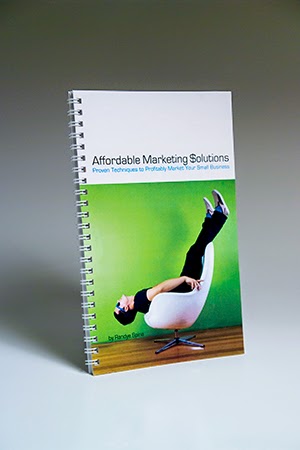
If you're looking for a good small business marketing read, this will help you market like a pro! Visit http://www.myaffordablemarketinghandbooks.com.

Copyright 2014 Affordable Marketing Solutions LLC

This blog uses copyscape.com to protect against plagiarism.